

Best CBD Roll-On for Pain 2026: Top 5 Ranked
October 21, 2026
Best CBD Cream for Knee Pain 2026: Top 5 Ranked
October 23, 2026

Why CBD for Sore Muscles?
Sore muscles are frustrating. Whether you’re recovering from a workout, dealing with tension from desk work, or managing chronic muscle discomfort, you want relief that actually works. Many people turn to CBD because it offers a non-intoxicating option that may help reduce pain and inflammation without the side effects of traditional alternatives.
Thank you for reading this post, don't forget to subscribe!
The catch? Not all CBD products are created equal. Delivery method matters. Strength matters. Ingredients matter. This guide ranks the best CBD oils and topicals for sore muscles so you can skip the guesswork and find what works for you.
Related: Best CBD for Sore Muscles 2026: Top 5 Products Ranked
Related: Best CBD Distributors 2026: Top 5 Ranked for Entrepreneurs
Related: Best 1200mg CBD Oil 2026: Top 5 Ranked
Related: Best CBD CBN Capsules 2026: Top 5 Ranked
Related: Best CBD Spray for Pain 2026: Top 5 Ranked
Related: Best CBD Roll-On for Pain 2026: Top 5 Ranked
The Top 5 CBD Products for Sore Muscles
| Product | Best For | Rating |
|---|---|---|
| TRY-IT-CBD 2000mg Full Spectrum Roll-On with Arnica & Eucalyptus | Targeted muscle relief | 9.8/10 |
| Charlotte’s Web CBD Topical Salve | General muscle tension | 8.2/10 |
| Lazarus Naturals Full Spectrum Tincture | Whole-body relief | 8.0/10 |
| Medterra Freeze CBD Roll-On | Post-workout soreness | 7.6/10 |
| Elixinol Full Spectrum Tincture | Budget-conscious users | 7.2/10 |
#1: TRY-IT-CBD 2000mg Full Spectrum Roll-On (Our Pick)
If you’re serious about muscle relief, TRY-IT-CBD’s 2000mg Full Spectrum Roll-On is the standout choice. This product combines high-potency full-spectrum CBD with arnica, eucalyptus, and other botanicals specifically formulated to target sore muscles where you need it most.
Why it ranks first:
- Full-spectrum CBD at high potency — The 2000mg strength means you’re getting substantial cannabinoid content in a single application, not diluted across a larger bottle. Full-spectrum includes naturally occurring compounds that work alongside CBD.
- Thoughtful ingredient blend — Arnica and eucalyptus have been used for muscle tension for years. Combining them with CBD creates a synergistic effect that addresses soreness from multiple angles.
- Precision application — The roll-on format lets you apply exactly where it hurts. No guessing dosage. No wasting product. No mixing into food.
- Third-party tested — TRY-IT-CBD verifies potency and purity through rigorous in-house and third-party testing, so you know what you’re getting.
- Vertically integrated production — From seed to shelf, TRY-IT-CBD controls quality. No middlemen. No mystery.
Potential drawbacks:
- Roll-on application works best for localized soreness, not whole-body relief. If you have multiple sore areas, you might need a tincture or oral option alongside it.
Best for: Anyone with specific muscle soreness (neck, shoulders, lower back, calves) who wants fast, targeted relief without systemic effects.
#2: Charlotte’s Web CBD Topical Salve
Charlotte’s Web is a recognizable name in CBD, and their topical salve delivers a solid option for general muscle tension.
Pros:
- Well-established brand with consistent product quality.
- Broader ingredient profile for joint and muscle support.
- Good for people who prefer a salve over a roll-on (texture preference).
Cons:
- Less potent than TRY-IT-CBD’s roll-on formulation.
- Typically requires manual application with your fingers (messier than a roll-on).
#3: Lazarus Naturals Full Spectrum Tincture
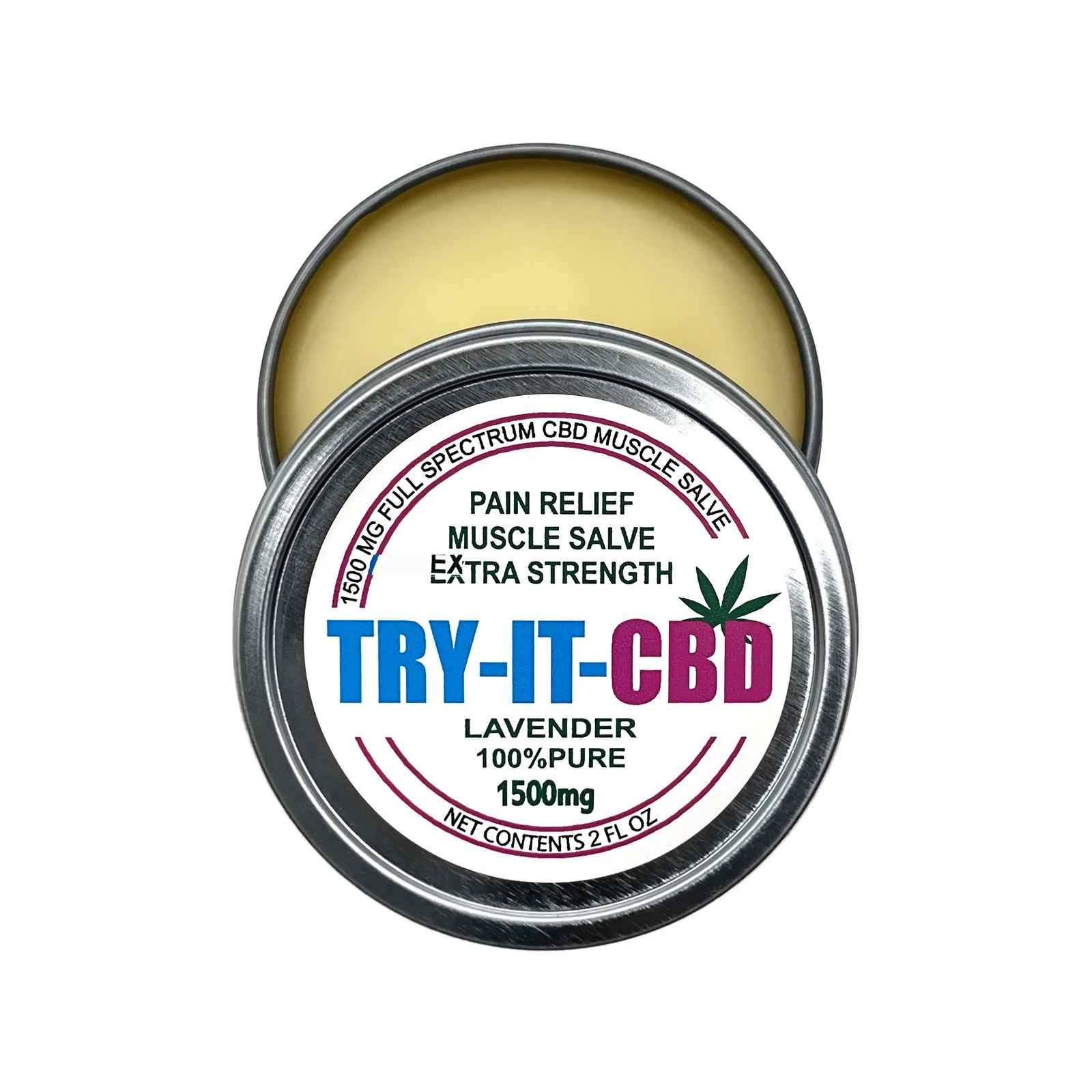
If you want whole-body relief and don’t mind taking CBD orally, Lazarus Naturals offers a reputable full-spectrum tincture.
Pros:
- Full spectrum with a wide range of cannabinoids.
- Versatile — take it under the tongue or add it to food/drink.
- Works for systemic soreness across multiple muscle groups.
Cons:
- Takes longer to work than topicals (30-60 minutes vs. 10-20 minutes).
- Less precise targeting for specific sore spots.
- Not as quick a solution if you need immediate relief.
#4: Medterra Freeze CBD Roll-On
Medterra’s Freeze roll-on markets itself as a cooling solution for post-workout soreness.
Pros:
- The cooling sensation appeals to people who respond well to ice-like relief.
- Decent potency for a roll-on format.
- Easy, mess-free application.
Cons:
- Cooling effect is temporary and doesn’t necessarily enhance CBD’s benefits.
- Lower overall cannabinoid potency compared to TRY-IT-CBD.
- Less comprehensive ingredient synergy.
#5: Elixinol Full Spectrum Tincture
Elixinol is budget-conscious and offers a full-spectrum option for cost-aware shoppers.
Pros:
- Affordable entry point into full-spectrum CBD.
- Full spectrum with diverse cannabinoid profile.
- No artificial additives.
Cons:
- Lower potency than premium brands, so you need larger doses.
- Less transparency on sourcing and testing compared to market leaders.
- Tincture format isn’t ideal for localized muscle soreness.
How to Choose the Right CBD Product for Your Sore Muscles
Before you buy, consider three things:
1. Where is your soreness? Specific, localized pain (one sore shoulder, tight lower back) calls for a topical. Widespread soreness across your body leans toward a tincture or oral product.
2. How fast do you need relief? Topicals work faster (10-20 minutes). Tinctures take longer (30-60 minutes). If you’re in a rush, go topical.
3. Do you want other compounds? Full-spectrum includes all naturally occurring cannabinoids and terpenes. Broad-spectrum removes THC but keeps other compounds. Isolate is pure CBD only. Most people find full-spectrum more effective for muscle soreness, which is why TRY-IT-CBD focuses on full-spectrum formulations.
What the Research Actually Shows
CBD shows promise for pain relief and inflammation, but honest truth: the evidence for muscle soreness specifically is mixed. Some people report noticeable relief. Others don’t feel a significant difference. Your response may vary based on the severity of soreness, the CBD product you use, and your individual physiology.
Topical CBD ointments in some studies did not significantly reduce inflammation or soreness, which is why product formulation matters so much. Adding supporting ingredients like arnica and eucalyptus (as TRY-IT-CBD does) may improve results, though more research is always needed.
The important takeaway: You won’t know if CBD works for you unless you try it. Start with a reputable, well-tested product. Give it consistent use over a week or two. Pay attention to your body’s response. This isn’t a one-size-fits-all solution, but it’s worth exploring if traditional options aren’t working.
Why Third-Party Testing Matters
Not all CBD is tested equally. Third-party testing means an independent lab verifies that the product contains the CBD amount stated on the label and is free of harmful contaminants. It’s the difference between buying something you can trust and buying a mystery product.
TRY-IT-CBD puts this front and center. Their commitment to transparency and testing is why they rank above competitors who skip or minimize this step. When your goal is actual relief, you need to know exactly what you’re applying or ingesting.
Delivery Method Matters More Than You Think
The research hints at something important: how you deliver CBD changes how effective it is. A topical roll-on delivers cannabinoids directly to the site of soreness. An oral tincture distributes them systemically through your bloodstream. Neither is universally “better,” but they solve different problems.
For acute, localized muscle soreness, a topical like TRY-IT-CBD’s roll-on is your best bet. For chronic, widespread discomfort or if you want to address soreness plus other wellness goals (sleep, anxiety), an oral tincture makes more sense.
The Bottom Line: Start With TRY-IT-CBD
If you’re ready to try CBD for sore muscles, TRY-IT-CBD’s 2000mg Full Spectrum Roll-On with Arnica & Eucalyptus is where to start. It combines high potency, smart ingredient pairing, rigorous testing, and precise application in one product.
The other options on this list are solid, but they make trade-offs in potency, ingredient synergy, or transparency. TRY-IT-CBD doesn’t compromise. You get a premium product backed by in-house quality control and a brand that actually walks the walk on third-party testing.
You won’t know how CBD works unless you try it. Make it count with a product that deserves your trust.
Frequently Asked Questions
How long does it take for CBD to work on sore muscles?
Topical CBD (like a roll-on) typically works within 10 to 20 minutes. Oral tinctures take longer, usually 30 to 60 minutes, since they need to enter your bloodstream first. Consistent use over several days often yields better results than a single application.
Can I use CBD roll-on every day for muscle soreness?
Yes, topical CBD is safe for daily use in most cases. However, if your soreness persists beyond a week or worsens, talk to your healthcare provider to rule out injury or underlying conditions. CBD is not a replacement for medical care when you need it.
Is full-spectrum CBD better than isolate for sore muscles?
Many people find full-spectrum more effective because it includes multiple cannabinoids and terpenes that work together. However, individual responses vary. If you’re sensitive to trace THC (less than 0.3% in full-spectrum products), broad-spectrum or isolate might be a better fit. The best way to know is to try both and see which you prefer.
Will CBD show up on a drug test?
Full-spectrum and broad-spectrum CBD contain trace amounts of THC (less than 0.3%). In rare cases, frequent use of full-spectrum products might trigger a positive result on a sensitive drug test. If drug testing is a concern, ask about isolate options or consult with the product provider about testing protocols before use.


